Parker New Construction vs. Resale: Comparing the Full Cost
September 10, 2026
September 10, 2026
I've sat with buyers at the title company in Parker who watched a monthly payment estimate jump by several hundred dollars after everything else on the contract was already signed. Not because the interest rate moved. Not because the appraisal came in low. Because a line item called a Metro District mill levy showed up on the closing disclosure six weeks after they toured the model home.
That moment is the reason I'm writing this instead of another list of Parker neighborhoods with pools and parks. If you're cross shopping a new build in one of Parker's newer communities against a resale home in an older subdivision, the sale price on the two listings can look nearly identical. The actual math underneath them usually isn't. Understanding why takes about ten minutes, and it's ten minutes that can change which house you write an offer on.
Here's the headline stat that gets repeated without much thought: Parker's median sale price fell about 5.2 percent year over year as of March 2026, landing near $658,000. Read on its own, that sounds like a market cooling off across the board. A buyer's market. Sellers losing leverage.
Except in that same window, the median price per square foot in Parker actually rose close to 8 percent year over year. Those two numbers cannot both be telling you "values are falling." What they're telling you is that the mix of homes selling has shifted. Smaller homes, different floor plans, a different slice of inventory moved through the market than moved through it a year earlier. The price per square foot, which strips out size, held up. The median sale price, which doesn't, moved with the mix.
This matters for you specifically if you're comparing a new build to a resale, because the two segments of Parker's market are not shifting the same way or for the same reasons. Resale sellers are, for the most part, holding their ground. In tracked Parker sales data running through the end of 2025, the sale to list ratio held near 98 percent, and while fewer homes were selling above asking than a year earlier, that reads as a gradual softening, not a collapse. An individual homeowner who isn't under pressure to sell will simply wait for their number rather than chase the market down.
Builders don't have that option.
A builder with an unfinished community full of standing inventory is paying interest on construction loans every month a house sits empty. A homeowner with equity built up over a decade is not. That difference in incentive is the whole story of what's happening in Parker's new construction market right now, and it's worth seeing in one place.
| Resale seller in Parker | Builder in a new Parker community | |
|---|---|---|
| Pressure to move inventory | Low, can wait for their price | High, carrying costs accrue daily |
| Typical response to a slower market | Hold price, wait longer | Cut price, buy down rate, add credits |
| What buyers see | Sale to list ratio near 98 percent | Advertised incentives, sometimes $20,000 rate buydowns |
| Closing timeline | Can close in 30 to 45 days | Move-in ready homes in 30 to 60 days, to be built homes in 4 to 12 months |
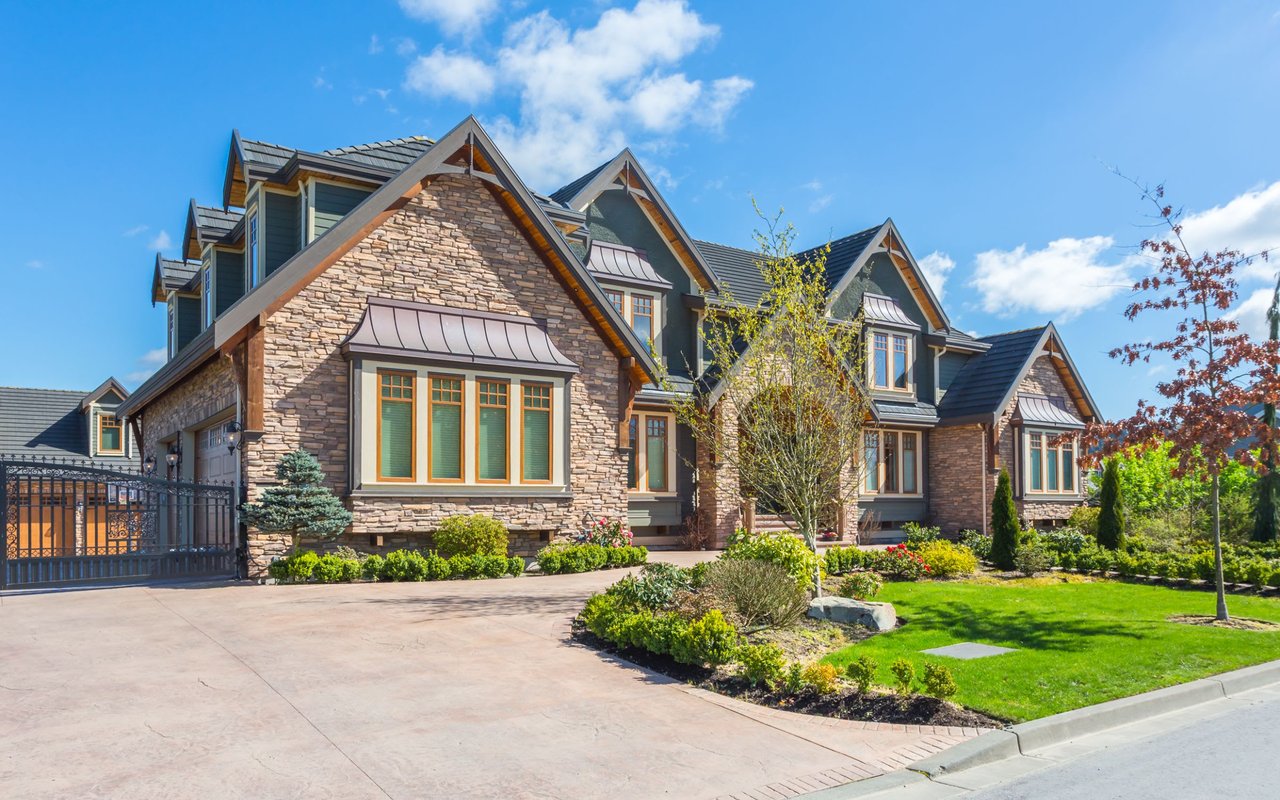
You can see this play out by name across Parker's active builder communities. In Solstice, Shea Homes has kept its pricing competitive in the low to mid $700s in part by including a finished basement as standard, ten foot ceilings, carpet, drywall, and a full bathroom, an inclusion estimated to add $100,000 to $125,000 in value that a resale buyer would otherwise have to pay for separately as a renovation. In Tanterra, Trumark Homes is marketing its Kestrel and Osprey collections, with Osprey's single family layouts running 2,127 to 3,100 square feet, and Toll Brothers' Cherry Creek Trail community is positioned around low maintenance ranch style living for buyers who want fewer of the tradeoffs a custom lot demands. Elsewhere in Parker, a recent listing from builder Gladstone Custom Homes advertised a $20,000 rate buydown incentive outright, the kind of tool builders reach for to sell payment relief rather than cut the sticker price itself.
Nationally, more than a third of builders are currently cutting list prices, with average reductions running around 5 percent, and roughly six in ten builders are offering some form of buyer incentive according to industry survey data. A completed spec home sitting empty carries costs, while a homeowner may be able to choose not to sell.
That contrast is worth remembering the next time a new build's list price looks close to a resale's. One of those two sellers is far more likely to move on price than the other, and it isn't the one you'd assume from the sticker alone.
In many of Parker's newer communities, that tax cost comes through what's called a Metro District, a taxing authority separate from your HOA that issues bonds to pay for the roads, sewer lines, and parks inside the development. Those bonds get repaid through an additional mill levy on your property tax bill.
In an established Parker neighborhood without a Metro District, your effective property tax rate typically runs somewhere around 0.6 to 0.7 percent of assessed value. Inside a Metro District community, that same rate can run 1.1 to 1.5 percent or higher.
On a $700,000 home, that's the difference between roughly $4,550 a year in property tax and something closer to $9,100 a year, depending on where in that range the specific district lands. Spread across twelve months, you're looking at a gap of a few hundred dollars a month that has nothing to do with your interest rate, your down payment, or the sale price you negotiated. It's baked into the community you chose, and it's the kind of number that a rate buydown can offset partially but not entirely.
None of this makes new construction the wrong choice. A $20,000 rate buydown plus a basement that would otherwise cost six figures to finish yourself can easily outweigh a Metro District's tax premium over the years you own the home. But it's a comparison you need to run with real numbers, not just glance at two list prices and assume they mean the same thing.
As of September 2026, Parker's median list price sits close to $711,000, down modestly both month over month and year over year, with homes taking a median of 59 days to sell. That's a market with some room in it, not a frenzy. If you're weighing a resale against a new build in that environment, the questions worth asking are specific rather than general.
Ask what the Metro District mill levy actually is for the specific community, not the citywide range. Ask whether the builder's incentive is a rate buydown, which lowers your payment for a defined period or the life of the loan depending on structure, or a straight price cut. Ask a resale seller's agent how long the home has actually sat, since days on market citywide and days on market for a specific listing can tell very different stories.
A builder's incentive and a resale seller's flexibility are two different tools solving two different problems. Knowing which one you're actually negotiating against changes what you ask for.
Is a Metro District the same thing as an HOA? No. An HOA enforces community rules and maintains shared amenities through monthly dues. A Metro District is a government taxing entity that repays infrastructure bonds through your property tax bill. You can have both in the same new construction community, and they show up as separate charges.
Is a builder's rate buydown better than a straight price cut? It depends on how long you plan to keep the loan and the rate. A buydown lowers your monthly payment, sometimes only for the first year or two, sometimes for the life of the loan. A price cut lowers what you owe overall. Run both scenarios against your actual timeline before assuming one is automatically the stronger deal.
Is Parker currently a buyer's market or a seller's market? Heading into September 2026, it reads as fairly balanced, closer to neutral than strongly tilted either direction, with moderate inventory and prices holding closer to flat than falling sharply. That balance is exactly why the new construction versus resale comparison matters more right now than it would in a market clearly favoring one side.
If you're trying to figure out what a specific new build or resale listing in Parker actually costs you month to month, not just what it lists for, I'd rather walk through the real numbers with you than let a sale price do the talking on its own. Reach out to Mike Bomgaars and let's compare the full costs before you decide.
This article is general information, not legal, tax or financial advice. Consult a qualified professional about your situation.
Mike Bomgaars is dedicated to helping you find the perfect home or sell for top value. With years of experience and a commitment to honest, hardworking service, he’s ready to guide you through every step of your real estate journey.